Tuesday, April 30, 2013
"The End of Poverty?" Reaction
Thus far in the documentary, I am really enjoying the personal stories of the numerous people dealing with poverty in foreign nations today. The film does a really good job at showing the meekness of those in desperation in their faces, how they aren't particularly upset by their conditions, but just hoping they would change sometime. I really enjoy the film's narration as well, personally because I have encountered Martin Sheen's work elsewhere in the Mass Effect video game trilogy. It is very informative and I have no qualms with the picture thus far.

Tuesday, April 23, 2013
Quick reaction to Something Wicked This Way Comes (Thus far)
I have currently not finished the movie, yet I am excited so far into the movie's atmosphere. The most chilling scene obviously would be where the Will and Jim are stuck in Jim's room, as tarantulas are sweeping in out of nowhere. The lack of lighting and the continuous wriggly feeling of the music helps to create a really dark and compacted atmosphere. The camera likes to keep close to the boys as they become swarmed by the arachnids. The story has also become quite interesting, as the townspeople are reverting back to their young ages as children. Being the only kids that know of the circus' evil, they are being hunted by Mr.Dark since they "know to much". The music matches the atmosphere and architecture perfectly, and is helpful for creating a lot of dramatic effects. I am very immersed in the plot and hope the conclusion is promising.
Monday, April 22, 2013
Video Game Violence
While doing research on this topic, I came across some interesting details from a few websites. For instance, not only do kids play video games, but it would seem that exclusively kids play video games.
-According to an article on the Huffington Post, 97% of children play video games, which is why violence in video games in such a sore topic.
-During the aftermath of the Columbine High School massacre, news reports confirmed that the students played violent video games such as Doom, Wolfenstien 3D, and Counter-Strike.
-Sometime after the events of the Virgina Tech Massacre ,where Counter-Strike faced controversy for its supposed influence in the shooters behavior, Brazil banned any sales of Counter-Strike.
-The video game industry has now grown larger than both the film and music industries.
-Video games now have a huge influence over the sales of songs, albums, an artist popularity. More largely than that of the film industry.
With video games having such a large influence over today's culture, its no wonder why parents have stepped up to defend their children. The problem with addressing mature topic in video games is that they have such a large influence on those that play them. Interactive storytelling is by far the most immersive form of entertainment, so when people view it as wrong to address things such as racism, sexual themes, or extreme violence, it not only causes outrage, but limits the potential of the developers. I suppose the only true way to tell what games a child or pre-teen can or can't play is to be judged by the parent. They simply need to be more involved in the ideal of video games, along with studying their children habits or attitude so they can more easily tell which games they will be affected by, and which they can play without having a large effect on them.
-According to an article on the Huffington Post, 97% of children play video games, which is why violence in video games in such a sore topic.
-During the aftermath of the Columbine High School massacre, news reports confirmed that the students played violent video games such as Doom, Wolfenstien 3D, and Counter-Strike.
-Sometime after the events of the Virgina Tech Massacre ,where Counter-Strike faced controversy for its supposed influence in the shooters behavior, Brazil banned any sales of Counter-Strike.
-The video game industry has now grown larger than both the film and music industries.
-Video games now have a huge influence over the sales of songs, albums, an artist popularity. More largely than that of the film industry.
With video games having such a large influence over today's culture, its no wonder why parents have stepped up to defend their children. The problem with addressing mature topic in video games is that they have such a large influence on those that play them. Interactive storytelling is by far the most immersive form of entertainment, so when people view it as wrong to address things such as racism, sexual themes, or extreme violence, it not only causes outrage, but limits the potential of the developers. I suppose the only true way to tell what games a child or pre-teen can or can't play is to be judged by the parent. They simply need to be more involved in the ideal of video games, along with studying their children habits or attitude so they can more easily tell which games they will be affected by, and which they can play without having a large effect on them.
Friday, April 19, 2013
Ray Bradbury

In his early life, Bradbury had written his first story at the age of elven, during the time of the Great Depression. His greatest and earliest influences were Edgar Allen Poe and Edgar Rice Burrows. Thus, a year later at the age of twelve, he imitated Poe's writing of horror stories until the age of eighteen. He spent most of his time at the library in Waukegan, where he read many authors including Burrows' Tarzan of the Apes. He was so enthralled with this book that he eventually wrote his own sequel to it at the same age of twelve. At twenty years old, he stopped reading genre books and moved into authors such as Alexander Pope and John Donne. In high school, he joined the Poetry and Drama clubs, with plans to be an actor, but as the years went on, he became more serious with his writing. Bradbury never went to college though, claiming that libraries were what raised him to know literature, and during the times of the Depression, he had no money, so he didn't believe in colleges or universities. It thus came to that he worked in the libraries for three days a week, for ten years.
With such an aspiring past, and no post-high school education, Bradbury's rise to becoming one of modern history's most successful authors was truly achieved through inspiration and hard working natural talent.
Thursday, April 18, 2013
Memorable Scene
My favorite and most memorable scene is from Zombieland. Near the film's end in the carnival, Columbus if faced with his greatest fear, clowns. To free Wichita and her younger sister from atop a drop tower ride, he is forced to deal with an undead circus clown. The one on one with this zombie does a really good job at bringing about Columbus' fears. He's spent the entire film killing countless of the rotting meatsacks, but now that he's run out of ammunition and faced with one that represents his deepest, darkest, and, as of now, only fear. As the camera slowly turns toward a medium shot of the clown zombie, blood and meat protruding from its mouth, you can almost hear the "oohhh" of the theater audience. The music slowly builds in the background, creating an intense atmosphere as he looks up a Wichita and realizes something very important. Columbus' only reason for his survival is his personal set of rules that serve as the entire premise of his character and the decisions he makes. It is in this moment that he makes the realization that in order to save the one he loves, some rules are meant to be broken. Thus he shatters one his most important rules, "Don't be a hero.", and the music almost instantly swells back in, as he rather quickly disposes of the clown and rescues Wichita.
This is what I liked most about the film, it had strong character development where the audience could connect with the main characters in the movie, well, a ZOMBIE movie. A lot of films dont lack this quality, but most horror/zombie films center around putting a large group of displaced survivors in one enclosed area as they are each slowly picked off by the horde, until they finally decide that while they're most weak with fewer amounts of survivors that they should actually make an effort to leave. Here, it actually centers around the fact that people have knowledge of what to do in the event of an apocalypse, hence the purpose for Columbus' set of rules. I mean, this scene takes place in a carnival, what do you think they were there for? They traveled there in hopes of finally finding it to be a place of salvation where they can just manage to outlive the apocalypse, whining infinitely about how much they wish they could go back to their old lives, seeing how this one holds absolutely no benefits? No, they came their to have fun, an aspect that the film manages to understand very well. Its not trying to be a tongue-in-cheek overriding with clichés comedy. Its trying to be exactly what it is, a huge joy-ride from start to end filled with twists and turns and a few shocking moments here and there like that of a roller coaster.
Nevertheless, this is why I liked this scene so much. It imprinted a lasting impression into my mind of how Columbus, a social outcast to the modern world, slowly became forced to deal with reality, and this scene showed his final tug away from the his set of rules that kept him both alive, yet torn away from others. Similar to how he was before the outbreak.
Wednesday, April 17, 2013
Scissorhands Critique
Written By:
Jacob Gilbert-Mahoney
Mitchell Duncan
In the film Edward Scissorhands,
Johnny Depp plays the lead role of Edward Scissorhands. His entire performance
is rather silent, as he only speaks 169 words throughout the entire film. There
are many themes within this particular movie, including romance, hatred, and
fear. All of these incorporate into Depp’s character as an isolated
monstrosity. This antihero, who dominantly speaks without speaking, can be very
powerful and influential to the viewer through acting with his eyes. Once his
secluded character is finally brought into society, he undergoes a slow change
as to adapt newfound home.
Johnny Depp made many choices in
the film that we make throughout our daily lives. The only difference is that
his isolation caused him to never develop his common sense and difference right
and wrong and good and evil. The more he stays within reality; he becomes more
enabled to develop these traits. It does not come fast though, halfway through
the film; he is tricked into robbing a house, and is then arrested. Soon after
these events, his neighbor Joyce enacts to seduce him, but is rejected, causing
her to take revenge by claiming he tried to “rape” her. This combined with the break-in cause his
former chums to turn their backs on him along with Peg and her family for
taking him in.
The colors of the people’s
clothing, houses, and cars contrast largely to Edward’s costuming. While
everyone and everything appears colorful and flashy, Edward’s attire is of very
black clothing, pale complexion, facial scars, and crazy hair. This was likely
as a way to display Edward’s difficulty to blend with reality and the people he
is surrounded with. His attrite also matches his disposition, which is very
different from the happy and out going personalities of the community members.
We find this very important because it displays the uniqueness of Edward and
the similarities of everyone in the small neighborhood. Costuming is clearly of
the essence in this motion picture because the actor can portray a monstrosity
to his heart’s desire, but if he doesn’t appear different from the others, the
full effect cannot sink in to the audience. We thought this was well used
through the entirety of the screenplay, as it matched very well with the
musical score.
The portrayal of his role uses
different techniques. The director uses full-front position to help display
vulnerability and silence as a character. His entire role is reprised through
acting with his eyes. In variation, Tim Burton (director of the film) also uses
the three-quarter turn at the first reveal of Edward to make appear hostile. As
the plot evolves, this impression changes from a violent figure to a
passion-driven character. This excellent use of camerawork and angling helps the
viewers understand the characters and plot in a deeper meaning.
To establish an effective use of
mystery, Burton uses many different techniques for lighting in the film. One
example is his use of low-key lighting at the first reveal of Edward. This
particular use of lighting is used to create a mysterious and somewhat ominous
view of a character. At first glance, you can only see Edward’s silhouette as
he emerges from the shadows, and revealing his scissorhands. This helps create
this ominous feeling, exciting the viewer, and giving the deceiving sense that Peg,
for example, felt in that instance. Another easy to spot lighting technique is
used is backlighting. This type of lighting is used effectively most during the
romantic scenes. In Edward Scissorhands,
Kim realizes her feeling for Edward when she is dancing in the “snow” (shaved
ice from Edward’s ice sculpture). In the background you can spot bright flashes
of light as if an aura around her, even though the scene was shot at night.
The film still has its share of
flaws to it despite its overall positive appeal. Kim’s brother, Kevin, played
by Robert Oliveri, plays a very small, and rather unimportant role throughout
almost the entire film. The only major set piece he plays is near the film’s
end when Edward saves him from a drunk driver, but his actions have the
consequence of mistakenly cutting him while trying to help him up. Also, at the
film’s end, it is revealed that the elderly woman speaking is Kim. She believes
that Edward is still alive, even after all this time, because before he came
down from the mansion, there was no snow, but after he did, there always was.
The film claims that the ice sculptures he makes in his mansion, he uses to
make snow, which falls upon the neighborhood below. The problem with this
theory is how in the world he managed to get the ice, minus actually brining it
into the mansion. It isn’t possible that he managed to carry those tons of ice
into his home. Kim claims she never went up to the mansion afterwards because she
wanted to remember her as a young girl and not as an elderly woman. That means
had to remain entirely self-sufficient as he went back to his old life of
isolation, so how does he manage to get all of that ice? This plot hole appears
to be the only major one, but it is quite a big one.
To conclude, Edward Scissorhands is very well a good movie. It teaches high
moral values, an obvious one being: “Don’t judge a book by its cover.” It’s
symbolic, enjoyable, and delivers an outgoing message to the audience. Yet the
film has its issues, with a major plot hole, and the protagonist can be a tad over-the-top.
Its understandable that Edward was secluded from society, thus has no common
sense, but the only missing components were his hands. Cant he still portray
emotions on some level rather than evolving them when finally in society? It is
easily a Tim Burton classic to be preserved through the ages.
Follow Mitchell's blog here: http://www.mitchellsblog14.blogspot.com/
Follow Mitchell's blog here: http://www.mitchellsblog14.blogspot.com/
Sunday, April 14, 2013
Post-Edward Scissorhands (Questions!)
After finally watching Edward Scissorhands, I was asked to answer a few questions based on my analysis of the film. Fantastic.
The entire neighborhood is constructed, describe the colors used in the neighborhood scenes?
The neighborhood is quite bland. All of the houses appear to be painted one color and the grass is as clean and green as a golf course. Besides the colors, they all appear quite symmetrical with the same green hedges and backyards.
What could be the desired effect in use of color?
It was likely used as a way to represent how everything appears so regular and alike within the neighborhood. While the colors do appear a tad flashy, it does give a sense of how everything appears normal or otherwise basic within the community.
As the woman drives up to the haunted house there is background music playing. What is the desired effect of this music? Describe two other places in the film where the soundtrack or film score affected your viewing of that scene.
In that particular scene, the desired effect was to make a sort of mysterious tone. This actually matches well with the sudden changes of the bright green grass of the neighborhood to the half-dead forest and black surface of the mansion. The background music assists in this moment to immerse the viewer in the first exploration the woman has into the mansion and the first in-depth look the viewer has into it. The film impressively uses the music in the opening credits as the chimes of bells in the music help to create a chilling tone. This matches perfectly with the first glimpses of the dark architecture of the mansion and the apparent winter weather. The film also uses its music to its advantage when Edward is trapped within Jim's house. The fast pace of the music helps sets a tone as you can see the panic in Edward's face as he desperately claws at the door knob trying to escape.
How does the costuming set the main character, Edward apart from the other community members and why do you think Edward to be so visually different? How does this help the actor portray his role?
This goes back to the original idea of how the rest of the neighborhood is so colorful, as well as its residents. Everyone appears so expressive, which matches their personality, as well as connected. This is why Edward's appearance looks so different from everyone else. His dark clothing, pale complexion, facial scars, and rough boots make him so diverse from the rest of the community. This is something, however, that you would expect from a monstrosity that is brought into society, but if he doesn't LOOK like a monstrosity then it wouldn't be as effective.This is something the director was likely going for, if a person acts like a monster, talks like a monster, and even believes he is a monster then that's good acting, but if he doesn't actually appear like a gloomy person than everyone might as well suspect that he's a social outcast that has stayed out of the sun for far too long. His clothing, like the rest, also matches his personality. He's been disconnected from society and therefore lacks common sense and learns these traits as he goes. This sort of portrayal can help the actor understand that since he doesn't appear like any of the extremely colorful people on set than he shouldn't act like hes at a Halloween party, he should act like someone he doesn't fit in.
What is Tim Burton (Director) saying about the nature of conformity in this film? How does he use color and visual imagery to drive home this point?
Likely saying how in terms of the nature of conformity how the socially unaccepted are accepted. Edward, who has been isolated from reality and society for all of his time alive, is suddenly pulled into reality, and is almost immediately accepted as the highlight of the neighborhood. He even cooperates with others better than the others within the neighborhood, and even befriends the local police after his arrest, which later saves life (oh, spoilers). Tim uses colors very well within the film, as described before, to show how different Edward is from the rest of society. His pale complexion and dark clothing doesn't correspond well with the rest of the bright and flashy environment. It shows how disconnected he is from everyone else and his inability to blend, even though he is virtually accepted in everyone's eyes.
Is Edward a tragic figure? Why or why not based on the outcome of the film.
Originally, I was going to say no, seeing as how since Edward isn't really getting involved in these situations so much as he is pulled into them. Being disconnected from the rest of reality, he simply has no common sense and learns the difference between right and wrong and good and evil as the story evolves. I never though of him to be a person that does these acts selflessly as a human, but is just an ironically popular figure that is exploited. Halfway through the film that opinion changed when it is revealed how Edward's true love, Kim, is unfairly taken from him and this shows his first negative emotion as an actual person. Later he accidentally injures Kim, which practically turns him against everyone else, except Kim...because she loves him...and all those little things. It feels a bit symbolic when he removes his attire that he has kept on since he first entered the neighborhood, and quickly sinks back into that ideal of what an actual monstrosity is, as he wreaks havoc upon the works of art he made for everyone else, utterly destroying them. Then in a final scene, he mistakingly injures Tim, and like a scene out of Frankenstein, is forced back into his mansion by an angry mob. Then I took a look back: He rejects one person who is in love with him for the one he loves, he injures the one he loves, he becomes isolated from society yet again, and the people who once trusted him now perceive him as a threat. All of these changes I felt rounded him into a tragic figure rather than an inconveniently placed one.
What are some of the highlights, twists and turns of the story?
-When Edward rejects Joyce, she becomes infuriated and claims he attempted to "rape" her.
-Edward mistakingly injures Tim with his "scissorhands" after pushing him out of the way of a moving car.
-He mistakingly injures Kim with a clumsy move that causes Jim to force him away.
-He falls back into isolation within the roof where he was first discovered by Peg.
-Despite his rather off-putting appearance, he appears to be quite the ladies man, as two women fall in love with him.
Research online what people Tim Burton consistently works with for his productions and list three here. Discuss why creatively this might be important for a Director.
-Johnny Depp (this film! :D)
-Danny Elfman
-Helena Bonham Carter
I feel as though this technique is a way of sticking to a style. When you have a certain flow of writing or managing that you like, you don't tend stray from that path, at least too far. So, working with certain collaborates offers the chance to remain within the same style of writing without suffering from loss of experience. Knowing an actor's or writer's strengths and weaknesses makes them a whole lot easier to manage and puts a relief on the director so that he can maintain his way of creativity without sacrificing anything.
Well, those are my views on Edward Scissorhands, and as expected, Tim Burton didn't fail me (at least yet.). Overall, it's very memorable, symbolic, can appeal to most audiences, and delivers a positive message. Except to children. The only positive message they would get is not to run with scissors.
As the woman drives up to the haunted house there is background music playing. What is the desired effect of this music? Describe two other places in the film where the soundtrack or film score affected your viewing of that scene.
In that particular scene, the desired effect was to make a sort of mysterious tone. This actually matches well with the sudden changes of the bright green grass of the neighborhood to the half-dead forest and black surface of the mansion. The background music assists in this moment to immerse the viewer in the first exploration the woman has into the mansion and the first in-depth look the viewer has into it. The film impressively uses the music in the opening credits as the chimes of bells in the music help to create a chilling tone. This matches perfectly with the first glimpses of the dark architecture of the mansion and the apparent winter weather. The film also uses its music to its advantage when Edward is trapped within Jim's house. The fast pace of the music helps sets a tone as you can see the panic in Edward's face as he desperately claws at the door knob trying to escape.
How does the costuming set the main character, Edward apart from the other community members and why do you think Edward to be so visually different? How does this help the actor portray his role?
This goes back to the original idea of how the rest of the neighborhood is so colorful, as well as its residents. Everyone appears so expressive, which matches their personality, as well as connected. This is why Edward's appearance looks so different from everyone else. His dark clothing, pale complexion, facial scars, and rough boots make him so diverse from the rest of the community. This is something, however, that you would expect from a monstrosity that is brought into society, but if he doesn't LOOK like a monstrosity then it wouldn't be as effective.This is something the director was likely going for, if a person acts like a monster, talks like a monster, and even believes he is a monster then that's good acting, but if he doesn't actually appear like a gloomy person than everyone might as well suspect that he's a social outcast that has stayed out of the sun for far too long. His clothing, like the rest, also matches his personality. He's been disconnected from society and therefore lacks common sense and learns these traits as he goes. This sort of portrayal can help the actor understand that since he doesn't appear like any of the extremely colorful people on set than he shouldn't act like hes at a Halloween party, he should act like someone he doesn't fit in.
What is Tim Burton (Director) saying about the nature of conformity in this film? How does he use color and visual imagery to drive home this point?
Likely saying how in terms of the nature of conformity how the socially unaccepted are accepted. Edward, who has been isolated from reality and society for all of his time alive, is suddenly pulled into reality, and is almost immediately accepted as the highlight of the neighborhood. He even cooperates with others better than the others within the neighborhood, and even befriends the local police after his arrest, which later saves life (oh, spoilers). Tim uses colors very well within the film, as described before, to show how different Edward is from the rest of society. His pale complexion and dark clothing doesn't correspond well with the rest of the bright and flashy environment. It shows how disconnected he is from everyone else and his inability to blend, even though he is virtually accepted in everyone's eyes.
Is Edward a tragic figure? Why or why not based on the outcome of the film.
Originally, I was going to say no, seeing as how since Edward isn't really getting involved in these situations so much as he is pulled into them. Being disconnected from the rest of reality, he simply has no common sense and learns the difference between right and wrong and good and evil as the story evolves. I never though of him to be a person that does these acts selflessly as a human, but is just an ironically popular figure that is exploited. Halfway through the film that opinion changed when it is revealed how Edward's true love, Kim, is unfairly taken from him and this shows his first negative emotion as an actual person. Later he accidentally injures Kim, which practically turns him against everyone else, except Kim...because she loves him...and all those little things. It feels a bit symbolic when he removes his attire that he has kept on since he first entered the neighborhood, and quickly sinks back into that ideal of what an actual monstrosity is, as he wreaks havoc upon the works of art he made for everyone else, utterly destroying them. Then in a final scene, he mistakingly injures Tim, and like a scene out of Frankenstein, is forced back into his mansion by an angry mob. Then I took a look back: He rejects one person who is in love with him for the one he loves, he injures the one he loves, he becomes isolated from society yet again, and the people who once trusted him now perceive him as a threat. All of these changes I felt rounded him into a tragic figure rather than an inconveniently placed one.
What are some of the highlights, twists and turns of the story?
-When Edward rejects Joyce, she becomes infuriated and claims he attempted to "rape" her.
-Edward mistakingly injures Tim with his "scissorhands" after pushing him out of the way of a moving car.
-He mistakingly injures Kim with a clumsy move that causes Jim to force him away.
-He falls back into isolation within the roof where he was first discovered by Peg.
-Despite his rather off-putting appearance, he appears to be quite the ladies man, as two women fall in love with him.
Research online what people Tim Burton consistently works with for his productions and list three here. Discuss why creatively this might be important for a Director.
-Johnny Depp (this film! :D)
-Danny Elfman
-Helena Bonham Carter
I feel as though this technique is a way of sticking to a style. When you have a certain flow of writing or managing that you like, you don't tend stray from that path, at least too far. So, working with certain collaborates offers the chance to remain within the same style of writing without suffering from loss of experience. Knowing an actor's or writer's strengths and weaknesses makes them a whole lot easier to manage and puts a relief on the director so that he can maintain his way of creativity without sacrificing anything.
Well, those are my views on Edward Scissorhands, and as expected, Tim Burton didn't fail me (at least yet.). Overall, it's very memorable, symbolic, can appeal to most audiences, and delivers a positive message. Except to children. The only positive message they would get is not to run with scissors.
Friday, April 12, 2013
The Arts in Propaganda
While researching the social institution of the Arts, something that grabbed my interest was how effective arts have been used in propaganda.
The Arts have had its origins far back in the prehistoric times of human history. "Cavemen", as we know them, began to discover the methods of cultivation and animal domestication. With these new methods of living, they began to focus different aspects of life. Cave paintings serve as the primary evidence of the origins of artistic expression, with the earliest found in Spain, in the cave known as El Castillo. Dating at over 40,800 years old, University of Bristol's study lead, Alistair Pike, claims this to be"...currently Europe's oldest dated art by at least 4,000 years". These paintings commonly depicted animals or methods of targeting or spotting animals. Others were used to depict gods, which can also depict religion back to this era.
Today, the Arts are very commonly used in propaganda to support politics, religion, government, education, and many more topics. This type of art is used to influence one side of a community to one side or of an argument or cause. These depictions are commonly very racial, but proved to effective in many ways. Although, propaganda is also used as a form of communication, illustrating a time or event within places of history.
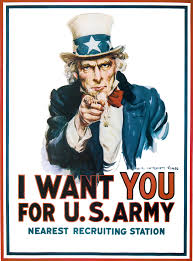 Propaganda had its uses throughout the U.S., with the most famous likely being during the World War II era. There were often depictions of a Japanese man encouraging a worker to take the day off, showing people that if they were to work less, it would help the Axis powers. Others date back to 1887 at the start of the Russo-Turkish War, depicting the scenes of rape and slaughter by Ottoman forces.
These ways of propaganda had many psychological influences over the modern world, as propganda is used as a very effective
way today to influence society as a whole as it has done in the
past.
The Arts have had its origins far back in the prehistoric times of human history. "Cavemen", as we know them, began to discover the methods of cultivation and animal domestication. With these new methods of living, they began to focus different aspects of life. Cave paintings serve as the primary evidence of the origins of artistic expression, with the earliest found in Spain, in the cave known as El Castillo. Dating at over 40,800 years old, University of Bristol's study lead, Alistair Pike, claims this to be"...currently Europe's oldest dated art by at least 4,000 years". These paintings commonly depicted animals or methods of targeting or spotting animals. Others were used to depict gods, which can also depict religion back to this era.
Today, the Arts are very commonly used in propaganda to support politics, religion, government, education, and many more topics. This type of art is used to influence one side of a community to one side or of an argument or cause. These depictions are commonly very racial, but proved to effective in many ways. Although, propaganda is also used as a form of communication, illustrating a time or event within places of history.
These ways of propaganda had many psychological influences over the modern world, as propganda is used as a very effective
way today to influence society as a whole as it has done in the
past.
This image of Uncle Sam is
possibly the most famous in
American history.
Wednesday, April 10, 2013
Chew On This
 The book "Chew on This" is a investigative journalistic novel based around the fast-food industry. From the beginning it starts to tell the origins of fast-food itself, which is something I really like. It goes with the old saying from Sun Tzu, "Know your enemy...". Eric Schlosser and Charles Wilson understood that for people to truly understand why fast food is bad, they had to go into its origins.
What I like about this method though is that the book keeps it interesting by going into the personal lives of fast food employees. It shows how their lives have been affected by their jobs and how lowly they are respected for them. For example, a 16-year employe named Sadi worked from eight o'clock in the morning until 11 o'clock at night, due to a lack of helping hands and different managers coming in to ask for her help. She was then asked to help close the restaurant and left at three o'clock in the morning. The next day, her manager gave her a thank-you gift for working nineteen hours and a half with only a half-hour break: a bag of candy.
The book keeps sticking to its side of the argument, which is another thing that I found very important. It doesn't completely bore the reader with just facts on how fast-food came to be, but how these innovations affected the economy. It even goes as far to tell how these corporations have targeted children as their marketing and outside help. Although, the book can be inspiring as to show how many of these entrepreneurs started off as total failures and high school dropouts, then came to be millionaires. It was only by trial-and-error that they managed to succeed.
Sadly, I haven't managed to finish the book, but I still find that it is very informative and interesting.
Tuesday, April 9, 2013
Edward Scissorhands
As an upcoming film we are about to watch, I predict Edward Scissorhands to be a very interesting film. Edward Scissorhands is a film created by Tim Burton, whom I have a special place in my heart for due to his producing of Batman Forever. To jog your memory, he also created these other famous works:
-The Nightmare Before Christmas
-Corpse Bride
-Charlie and the Chocolate Factory
There are also some interesting facts about the film as well. For instance, Johnny Depp, throughout the entire 1 hour and 40 minute film, only says 169 words. His love interest within the film, Kim, played by Winona Ryder, was also dating Depp coincidentally at the time. To prepare for his upcoming role, Depp watched many Charlie Chaplin films to learn to create sympathy without needing dialogue.
Considering I haven't seen the film yet, I decided to make a prediction. Its about a mobster named Edward. With scissors for hands. Who falls in love with the daughter of the rival family named Kim. And theirs a lot of jam in it. Like I said, I haven't seen the film yet, and its hard to find facts without wanting to spoil it for yourself. Nevertheless, I expect a lot of good things from Tim Burton as his most personal work.
-The Nightmare Before Christmas
-Corpse Bride
-Charlie and the Chocolate Factory
There are also some interesting facts about the film as well. For instance, Johnny Depp, throughout the entire 1 hour and 40 minute film, only says 169 words. His love interest within the film, Kim, played by Winona Ryder, was also dating Depp coincidentally at the time. To prepare for his upcoming role, Depp watched many Charlie Chaplin films to learn to create sympathy without needing dialogue.
Considering I haven't seen the film yet, I decided to make a prediction. Its about a mobster named Edward. With scissors for hands. Who falls in love with the daughter of the rival family named Kim. And theirs a lot of jam in it. Like I said, I haven't seen the film yet, and its hard to find facts without wanting to spoil it for yourself. Nevertheless, I expect a lot of good things from Tim Burton as his most personal work.
Monday, April 8, 2013
The Slender Man
Over the break, I spent a decent amount of time reading "The Slender Man", by Dexter Morgenstern, as opposed to an informative book called "Chew On This" (sorry Mr. Craddock). Anyway, the book is a horror/mystery novel based upon the internet-born urban legend known as The Slender Man.

He blends in very well.
As a bit of background, the Slender Man is a specter of legend made famous and created by the internet, known to be stalking humans for centuries. He is depicted as a tall, thin man with no face hair or face, pale, a black suit, and red tie. As expected from a novel born from the internet, it is a rather simple read. Difficult words are few and far and the author sticks to a common style. Sadly, there are quite a few grammatical errors within the book, and the style has an odd way of writing dialogue that can leave readers confused.
The novel follows the perspective of a freshman named Alyssa Redwood. After a tragic accident that claims the lives of numerous elementary students, with her brother being the sole survivor, she is stalked by the legend himself, the Slender Man. As people begin children and teens alike begin disappearing within the rather small town, Alyssa soon discovers that she must learn how to combat the being before she and her brother become then next victims.
Once you are able to get past the grammatical and formatting errors, the book is actually very enjoyable. The plot extends past the baseline knowledge of the internet and revolves around its own original ideas. It appears the author knows that if anyone buys the book, it will largely be people that already have background knowledge of the Slender Man. As one of those people, I found myself rooting for the Slender Man as opposed to the main character, but that may be because she can be hated by the reader, if that was intended.
I mean how could you not love that face?
I still found some issues, such as: *SPOLIERS* The grandmother had a bit too much of the information surrounding the Slender Man. Plus, the excessive use of the word "fiend" got a bit ridiculous.
Nevertheless, the book is still worth the read, despite its issues.
Welcome to the blog
Hello and welcome to the blog. I'm Jacob. Needless to say, I run this place.
Currently, this is only being used for my creative writing course: Writing for Publication. As the years go on, this will eventually expand to future courses and different practices. So, if your one of my classmates, welcome! If your a visitor just stopping by (but that's still kinda creepy), still welcome!
Now go away.
Currently, this is only being used for my creative writing course: Writing for Publication. As the years go on, this will eventually expand to future courses and different practices. So, if your one of my classmates, welcome! If your a visitor just stopping by (but that's still kinda creepy), still welcome!
Now go away.
Subscribe to:
Comments (Atom)